At a glance
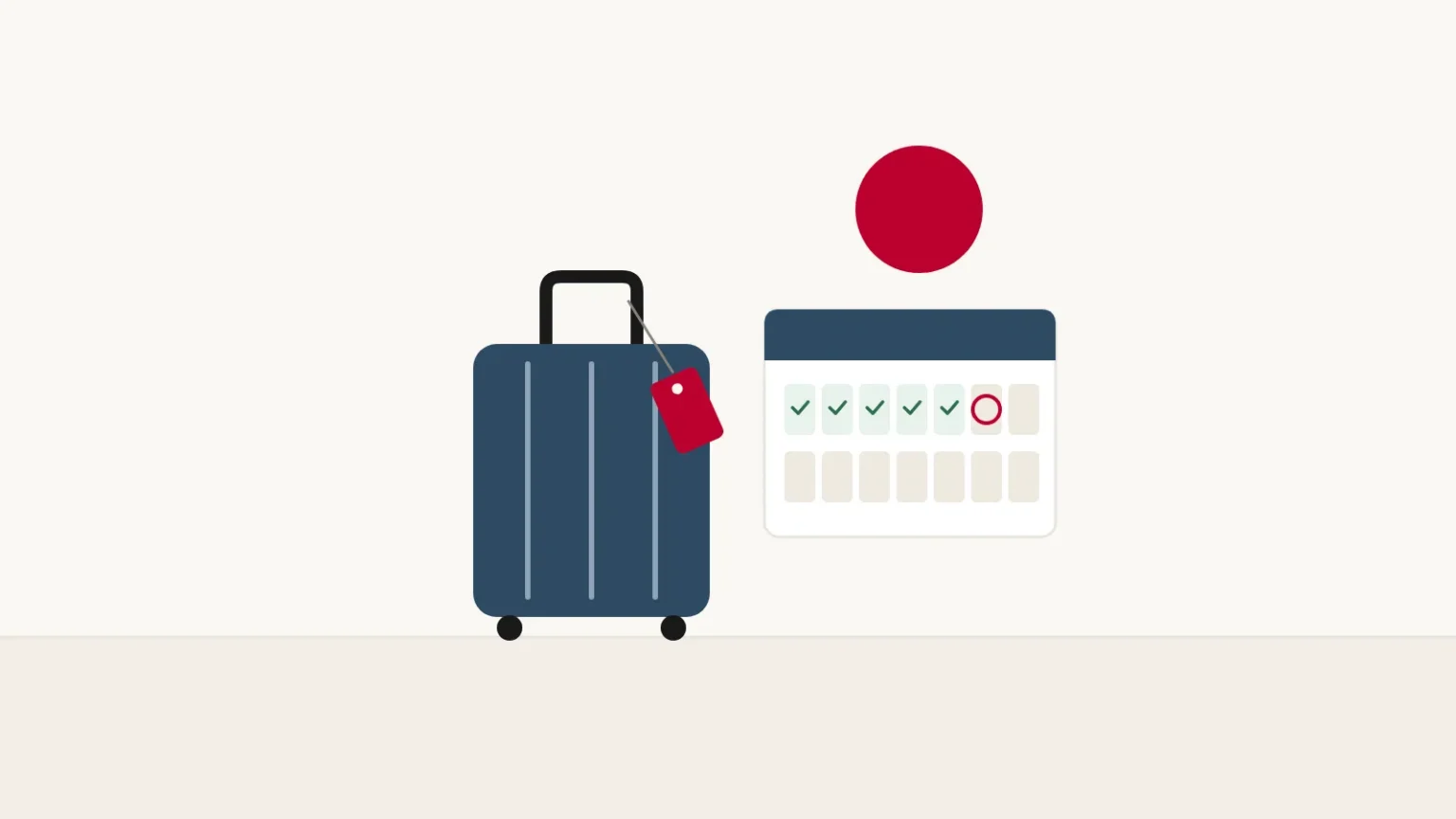
In your first two weeks, register your address at the city or ward office within 14 days of moving in. Your My Number follows by post. At the same office, join National Health Insurance and National Pension unless your employer enrols you. Then open a bank account and get a phone: both need the address on your residence card.
- Last updated
- November 7, 2026
Rules, fees and services change often. Last checked: 7 November 2026. Always confirm with the official sources below or with your city office before you act.
The first two weeks decide how easy the rest of your life in Japan will be. Almost everything depends on one step: registering your address. Your bank account, phone contract, health insurance and tax all use the address on your residence card (在留カード, zairyū kādo). Do it first, and the other steps become simple.
Day 1: your residence card at the airport
A residence card is issued to people who stay in Japan for more than three months. If you arrive at Narita, Haneda, Chubu, Kansai, New Chitose, Hiroshima or Fukuoka airport, you receive the card at the airport. At other airports and seaports your passport is stamped, and the card is posted to your home after you register your address.
- If you are 16 or older, carry the card with you at all times.
- It is your main ID for the city office, banks and phone contracts.
- If you lose it, apply for a new one at an immigration office within 14 days of noticing.
Days 1–14: register your address
This is the moving-in notification (転入届, tennyū todoke). The Basic Resident Registration Act gives you 14 days from the day you move in. Not reporting without a good reason can lead to a non-criminal fine of up to ¥50,000. And if you do not report an address within 90 days of arrival, your status of residence can be cancelled.
- Move into your home first. You register the place where you actually live.
- Go to the city office (市役所, shiyakusho) or, in big cities, your ward office (区役所, kuyakusho).
- Bring your residence card, or your passport if the card will be posted to you.
- Fill in the moving-in form. Staff write your new address on the back of your residence card.
- Ask for a copy of your certificate of residence (住民票, jūminhyō) if your bank or employer needs one. Copies have a small fee.
Example: Osaka City. When you come from abroad you do not need a moving-out certificate. If you register a family member and the head of the household is not Japanese, bring a document that proves your relationship, with a Japanese translation that names the translator. Example: Shinjuku City, Tokyo. The city warns that most counter staff speak only Japanese, and it offers interpreting by tablet at the counter. Bringing a Japanese-speaking colleague or friend still helps.
My Number and the My Number Card
After you register, the city sends you your Individual Number (マイナンバー, mai nambā), a 12-digit number used for social security, tax and disaster support. Your employer will ask for it. The letter also lets you apply for a My Number Card, a photo ID with an IC chip. The first card is free. You can apply by smartphone, by PC, at some photo booths or at the counter. About a month later a postcard tells you to collect the card at the city office.
New in 2026: one card instead of two. Since 14 June 2026 you can choose a specified residence card (特定在留カード), a residence card that also works as a My Number Card. It is optional. You can ask for it at the city office when you report your address after arrival, and there is no fee in that case. It takes at least about two weeks to make, and you cannot request it through the online residence application system.
Health insurance
Everyone who lives in Japan for more than three months must join public health insurance. If your company enrols you in its health insurance, it does the paperwork. If not (for example students, people between jobs, or people at small businesses that are not covered), join National Health Insurance (国民健康保険, kokumin kenkō hoken) at the city office. Shinjuku City asks you to do this within 14 days. Coverage, and the premium, starts from the day you should have joined, not the day you visit. So joining late does not save money. See our guide to health insurance and pension.
Pension
Registered residents aged 20 to 59 must join the public pension system. Company employees are enrolled by their employer. Everyone else, including students, joins National Pension at the city office. In FY2026 (April 2026 to March 2027) the premium is ¥17,920 a month. Students can apply to postpone payment. The details are in our health insurance and pension guide.
Bank account
Banks check your residence card, and many also ask for a student or employee ID. Open the account after your address is on your card. Your salary will be paid into it, and your phone, rent and utilities can be paid from it. Read our bank account and remittance guide before you go.
Phone
A phone contract also needs ID with your current address: your residence card, a driver’s licence, a My Number Card, or a passport only if it shows your address. You also need a credit card or a Japanese bank account for the monthly bill. That is why the bank usually comes first. See our guide to mobile phones and internet.
A simple 14-day plan
- Day 1: receive your residence card (main airports). Keep your passport and card together.
- Days 1–3: move into your home. Find your city or ward office and its opening hours (most are closed at weekends).
- Days 2–7: report your address. On the same visit, join National Health Insurance and National Pension if your employer does not enrol you, and apply for the My Number Card.
- Days 7–14: open a bank account. Then sign a phone contract.
- Within 14 days of any later move: report your new address again, and tell your bank and phone company.
Common mistakes
- Waiting until “everything is ready”. The 14 days start when you move in, not when your bank account or phone is ready.
- Registering a friend’s or agent’s address where you do not live. Register the place you actually live.
- Ignoring post in Japanese. Insurance premiums, pension bills and tax notices arrive as letters. Ask someone to read them with you.
- Throwing away the My Number letter. Your employer and the tax office need the number.
- Moving without telling the city office. A move inside the same city also needs a notice within 14 days.
Where to get help
Free help in your language. The Foreign Residents Support Center (FRESC) in Yotsuya, Tokyo, brings together government help desks for foreign residents. Its phone line is 0570-011000 (from some IP phones or from abroad: 03-5363-3013), weekdays 9:00 to 17:00. FRESC cannot process residence card procedures, but it can tell you where to go. Many cities also have their own foreign-resident help desk.
The Immigration Services Agency’s Guidebook on Living and Working explains all of this in 18 languages, including English, Nepali, Vietnamese, Indonesian, Filipino, Thai, Myanmar and Hindi (there is no Bengali edition). It is free to download.
Useful Japanese for the counter: our greetings and self-introduction lesson and numbers lesson (dates of birth, phone numbers).
Frequently asked questions
What happens if I register my address after 14 days?
Go as soon as you can. The law allows a non-criminal fine of up to ¥50,000 for not reporting without a good reason. If you do not report any address within 90 days of arrival, your status of residence can be cancelled.
My residence card was not given at the airport. What now?
That is normal if you arrived at a smaller airport or seaport. Report your address at the city office with your passport, and the card is posted to that address.
Do I need a My Number Card?
It is not compulsory, but the number itself is. The card is useful: it is a photo ID, it works as your health insurance card at clinics, and it is used for online tax filing. The first card is free.
My company has health insurance. Do I still go to the city office?
Yes, to report your address. You do not join National Health Insurance or National Pension there, because your employer enrols you in its health insurance and Employees’ Pension.
Where can I ask questions in English or my own language?
Call FRESC on 0570-011000 (weekdays 9:00–17:00), or ask your city’s foreign-resident help desk. The ISA Guidebook on Living and Working is free in 18 languages.