Japanese workplaces differ a lot: a factory, a care home, an IT company and a restaurant all have their own habits. But some patterns are common. Knowing them, and knowing your rights, makes the first months much easier.
Hierarchy and seniority
Many Japanese workplaces pay close attention to rank and experience. Your 上司 (jōshi) is your boss. A 先輩 (senpai) is someone who joined before you, even if they are younger; a 後輩 (kōhai) joined after you. A senpai often teaches a newcomer, and the newcomer shows respect through polite language and by asking for advice.
- People are often called by family name plus さん (-san), or by job title, such as 部長 (buchō, department manager).
- In many companies, pay and position have traditionally risen with years of service. This is changing, especially in IT and foreign-owned companies.
- Seating, the order of speaking and who leaves a meeting first can follow rank. Watch what others do.
Keigo: polite language
Japanese changes with who you are talking to. Polite language is 敬語 (keigo). The Agency for Cultural Affairs’ 2007 guidelines divide it into five types:
- 尊敬語 (sonkeigo) — respectful words that raise the other person, for example いらっしゃる (irassharu) for “to be / to come”.
- 謙譲語Ⅰ (kenjōgo I) — humble words for your actions towards someone, for example 伺う (ukagau, to visit or ask).
- 謙譲語Ⅱ (kenjōgo II, also 丁重語, teichōgo) — humble words that make your speech formal, for example 参る (mairu, to go or come).
- 丁寧語 (teineigo) — the polite です / ます (desu / masu) forms.
- 美化語 (bikago) — “beautified” words such as お茶 (ocha, tea).
Nobody expects a newcomer to master all of them. Start with です and ます forms (Verbs: the masu form) and a few set phrases, and you will be understood as polite.
- お疲れ様です (otsukaresama desu) — a greeting to colleagues during the day.
- お先に失礼します (osaki ni shitsurei shimasu) — when you leave before others.
- 申し訳ありません (mōshiwake arimasen) — a formal apology.
- 承知しました (shōchi shimashita) — “understood” to a boss or customer.
Meetings and decisions
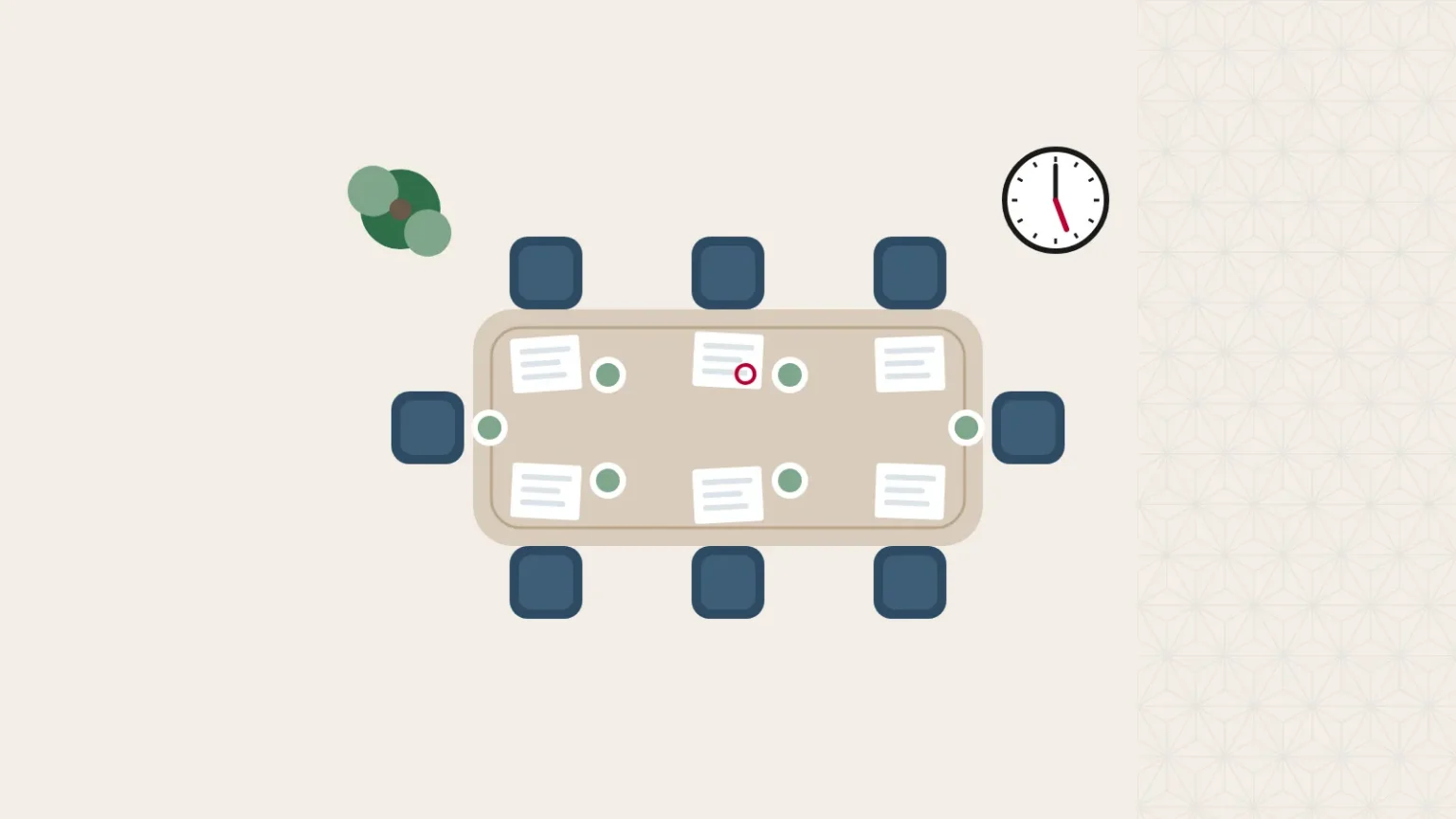
Decisions in Japanese companies are often discussed informally before a meeting, so that the meeting itself confirms what people already agree on. This is called 根回し (nemawashi). If you have an idea or a concern, talk to your boss or the right person beforehand rather than raising it for the first time in front of everyone.
- Arrive a few minutes early and bring something to take notes.
- Silence in a meeting does not always mean agreement. Ask afterwards if you are unsure.
- At first meetings people exchange business cards (名刺, meishi) with both hands and look at the card before putting it away.
Reporting: hō-ren-sō
報連相 (hōrensō) is short for 報告 (report), 連絡 (inform) and 相談 (consult). Supervisors expect to hear about progress, problems and mistakes early, before they become big. Telling your boss about a mistake straight away is seen as responsible. Practise the phrases in Workplace basics: greetings, safety and reporting.
Working hours and overtime: what the law says
Long hours have a bad reputation in Japan, but the law sets limits, and they apply to foreign workers exactly as to Japanese workers:
- Working hours: no more than 8 hours a day and 40 hours a week, not counting breaks (Labour Standards Act, Article 32).
- Breaks: at least 45 minutes if you work more than 6 hours, and at least 1 hour if you work more than 8 hours (Article 34).
- Overtime needs a labour-management agreement and is capped at 45 hours a month and 360 hours a year in principle. Even in special circumstances it must stay within 720 hours a year and less than 100 hours a month including holiday work, with an average of 80 hours over several months.
- Paid leave: after 6 months of continuous work with at least 80% attendance, you get 10 days of paid leave, rising with years of service (Article 39). Employers must make sure workers with 10 or more days take at least 5 days a year.
- Employers may not treat workers differently in pay, hours or other conditions because of nationality, creed or social status (Article 3).
Some jobs, such as drivers, construction and doctors, had special rules for overtime. Ask your company or the labour standards office if you are unsure.
Leaving on time
In some workplaces people stay late because others do. You do not have to. When your work is done at the end of your working time (定時, teiji), check whether your team needs anything, then say お先に失礼します and leave. If you are asked to do overtime (残業, zangyō), it must be paid at a higher rate (Article 37). Keep your own record of the hours you work.
After-work drinks (飲み会, nomikai) outside working hours are your choice, and you never have to drink alcohol.
Getting help
Since June 2020, employers must take measures against power harassment (since April 2022 for small and medium-sized companies too). If you have a problem with pay, hours or treatment at work, the Ministry of Health, Labour and Welfare offers phone advice for foreign workers in many languages and publishes a Working Conditions Handbook in English and other languages. If your status of residence is tied to your job, also read our Specified Skilled Worker visa guide or Engineer / Specialist in Humanities / International Services visa guide.
Sources
All sources were checked on 7 November 2026. Dates, prices and rules change, so check the latest information before you go.
- e-Gov — Labour Standards Act, Articles 3, 32, 34, 37 and 39: equal treatment, working hours, breaks, overtime pay, paid leave (Japanese law text) — checked 7 Nov 2026
- MHLW — Work Style Reform: overtime caps of 45 hours a month and 360 hours a year (English PDF) — checked 7 Nov 2026
- Agency for Cultural Affairs — Guidelines on keigo (Keigo no shishin), Council for Cultural Affairs, 2 February 2007 (Japanese PDF) — checked 7 Nov 2026
- MHLW — Preventing harassment at work: employers must act against power harassment since June 2020 (Japanese) — checked 7 Nov 2026
- MHLW — For foreign workers in Japan: labour standards, Working Conditions Handbook and phone advice in many languages (English) — checked 7 Nov 2026