Gifts are a small but important part of relationships in Japan, especially at work. You do not need to spend much. What matters is the gesture, the timing and a few simple manners.
What is omiyage?
After a trip, people in Japan usually bring back souvenirs, often edible, called お土産 (omiyage), and hand them out to family, friends and co-workers. Shops at stations, airports and tourist spots sell boxes of local sweets made for this.
Omiyage at work
Many workplaces have this habit after holidays, business trips and visits home. A typical omiyage for colleagues is:
- A box of individually wrapped snacks (個包装, kohōsō), so each person can take one.
- Enough pieces for everyone in your team or section.
- Something from the place you visited. A snack from your home country is a great conversation starter.
- Not expensive. A modest box is normal; an expensive gift can make people feel they must return it.
Put the box in the break room or hand pieces out, with a short word such as よかったら、どうぞ (yokattara, dōzo, “please have one if you like”). If you took time off, you can add お休みをいただき、ありがとうございました (oyasumi o itadaki, arigatō gozaimashita, “thank you for letting me take time off”).
If you bring food from abroad, check your home country’s and Japan’s rules on bringing food into Japan, and list the ingredients for colleagues who avoid pork, alcohol or meat. Our guide Eating well on a budget in Japan explains the label words.
Visiting someone’s home
When you are invited to a home, it is common to bring a small gift, called 手土産 (temiyage): sweets, fruit or something from your country. Hand it over after the greetings at the door or in the room, not on the street. Remember to take off your shoes at the entrance.
Seasonal gifts
Japan has two traditional gift seasons: お中元 (ochūgen) in summer and お歳暮 (oseibo) at the end of the year. They are sent to people who have helped you, such as business partners or relatives. Many younger people and companies no longer send them. As a newcomer you are not expected to, but you may receive them at a company.
Wrapping and presenting
- Shops will usually wrap a gift for you if you ask: プレゼント用にお願いします (purezento-yō ni onegaishimasu, “as a gift, please”).
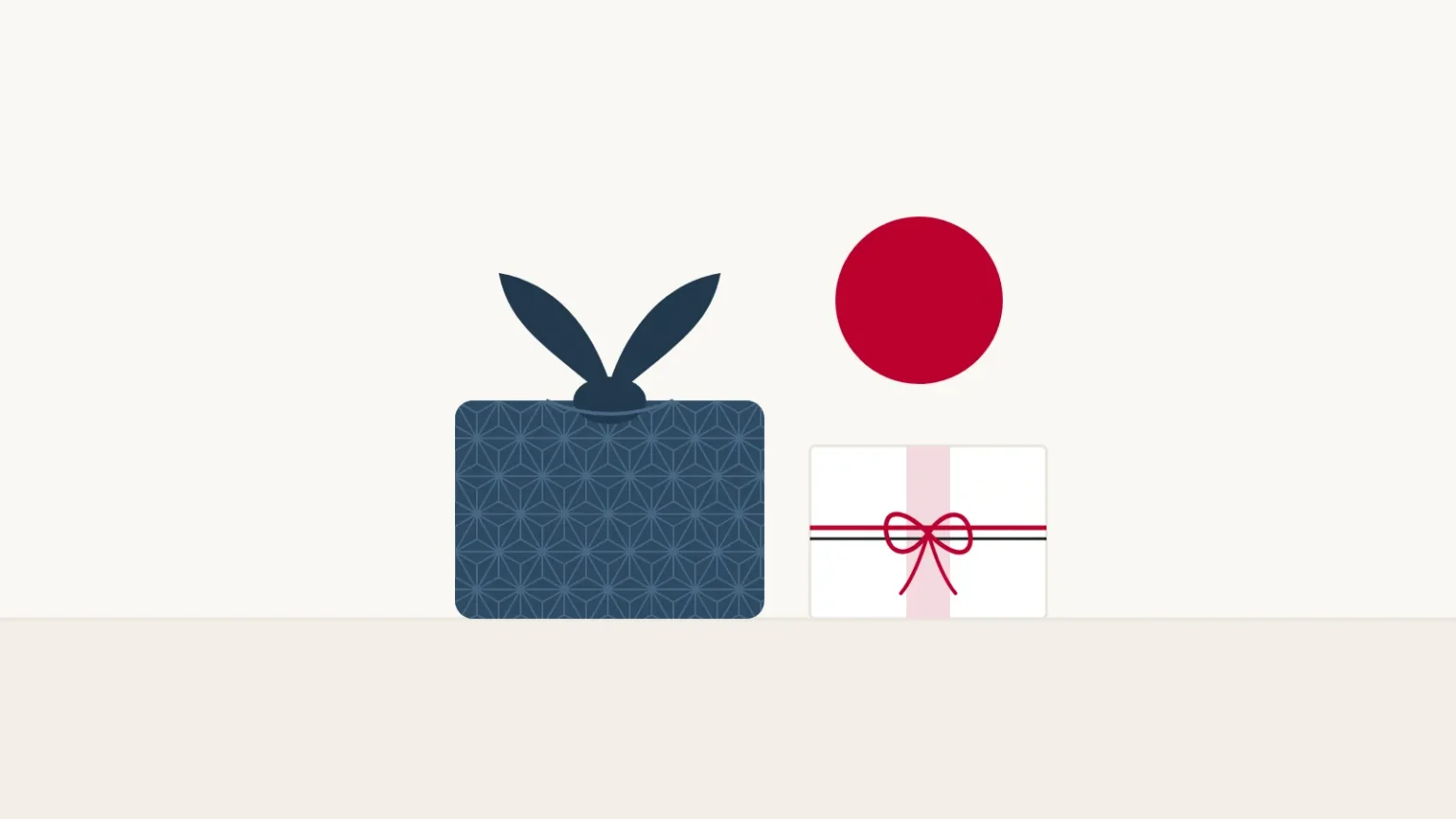
- Formal gifts may have a paper band called のし (noshi) with decorative cords (水引, mizuhiki). Shop staff will ask what the occasion is and choose the right one.
- Give and receive gifts with both hands.
- A modest phrase is common when giving: つまらないものですが (tsumaranai mono desu ga, “it’s only something small”). ささやかですが (sasayaka desu ga) has the same meaning and sounds more positive.
- Avoid sets of four: the number four can be read shi, which sounds like the word for death.
Receiving gifts
Say thank you, and thank the person again the next time you meet: この間はありがとうございました (kono aida wa arigatō gozaimashita, “thank you for the other day”). For big life events such as weddings or births, a return gift (お返し, okaeshi) is customary. For everyday omiyage, no return gift is needed; just bring some yourself after your next trip.
Gifts and work rules
- Some companies have rules on gifts from customers or suppliers. Ask before accepting anything valuable.
- Cash is not given as a casual gift. For weddings and funerals it goes in a special envelope; ask a colleague how much and which envelope.
- If you are unsure, ask a 先輩 (senpai, a more experienced colleague). People are usually happy to explain.
Learn the polite phrases in Workplace basics: greetings, safety and reporting, and more about the workplace in Japanese work culture.
Sources
All sources were checked on 7 November 2026. Dates, prices and rules change, so check the latest information before you go.