New Year (お正月, oshōgatsu) is the most important holiday of the Japanese year. Many people go back to their families, offices close, and towns become quiet. If it is your first New Year in Japan, plan ahead: some services stop for several days.
What closes, and when
| Service | Closed | Source |
|---|---|---|
| City and ward offices, immigration and other government offices | 29 December to 3 January | Act on Holidays of Administrative Organs |
| Banks (counters) | 31 December to 3 January | Banking Act Enforcement Order |
| National holiday | 1 January (New Year’s Day) | Cabinet Office |
- Do your city office paperwork, residence card procedures and bank transfers before the last working day of December.
- ATM hours and fees over the holidays differ by bank. Check your bank’s notice and keep some cash.
- Many clinics close. Cities run holiday emergency clinics; check your city’s website before the holidays and keep the numbers.
- Many small shops and restaurants close for a few days. Convenience stores and many supermarkets stay open, sometimes with shorter hours.
- Trains and buses run, often on a holiday timetable. Long-distance trains and flights around the holidays are crowded.
Before the holidays, check what to do in an emergency in Earthquakes and emergencies in Japan.
Year-end: cleaning and New Year’s Eve
In late December many homes and workplaces do a big year-end clean (大掃除, ōsōji). Workplaces often hold a year-end party, and the last working day ends with thanks for the year: 今年もお世話になりました (kotoshi mo osewa ni narimashita, “thank you for all your help this year”).
On New Year’s Eve (大晦日, ōmisoka), many people eat 年越しそば (toshikoshi soba), “year-passing” buckwheat noodles. At midnight, Buddhist temples ring their bells 108 times, called 除夜の鐘 (joya no kane).
Decorations
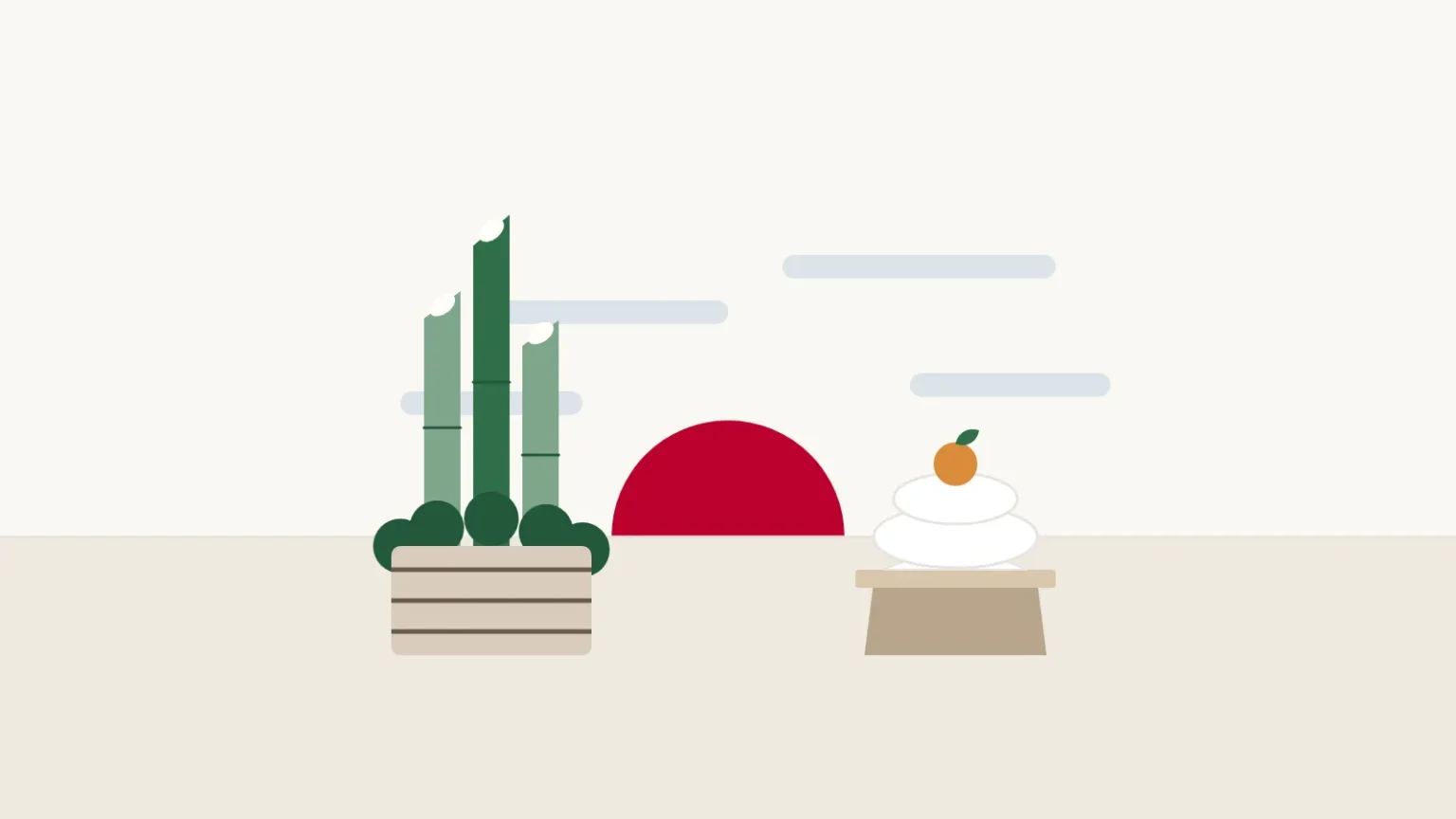
- 門松 (kadomatsu) — bamboo and pine decorations at entrances, usually displayed during the first week of January.
- 鏡餅 (kagami mochi) — two round rice cakes stacked with a bitter orange (橙, daidai) on top.
The first shrine visit
The first visit of the year to a shrine or temple to pray for good luck is 初詣 (hatsumōde). Some people go at midnight; most go in the first days of January. Famous shrines are extremely crowded, so a small local shrine is often more relaxing. You can buy a fortune (おみくじ, omikuji) and good-luck charms (お守り, omamori). Anyone may visit; follow the signs and the people around you.
New Year food
Special New Year dishes, おせち料理 (osechi ryōri), are served in stacked boxes called 重箱 (jūbako). Each dish has a wish attached, such as health or a good harvest. Many families now buy osechi from shops instead of cooking it. Another New Year dish is お雑煮 (ozōni), a soup with rice cake (餅, mochi).
Mochi is very sticky. Cut it into small pieces and chew well, and take extra care with children and older people.
Osechi and ozōni recipes can include fish stock, pork, sake or mirin. If you avoid them, see Eating well on a budget in Japan for the words to check.
Cards, greetings and gifts
Japanese people send New Year cards (年賀状, nengajō). For the 2027 New Year, Japan Post accepts them from 20 December 2026, and asks you to post them by 27 December so they arrive on 1 January. It also delivers New Year cards on 3 January 2027. Many people now send greetings by message instead.
- The New Year greeting: あけましておめでとうございます (akemashite omedetō gozaimasu), then 今年もよろしくお願いします (kotoshi mo yoroshiku onegaishimasu). Use it the first time you meet people in January.
- Children receive お年玉 (otoshidama), money in small decorated envelopes, from relatives.
- Shops sell 福袋 (fukubukuro), “lucky bags” with unknown items inside, at a set price.
After the holidays
Offices reopen in early January. Coming of Age Day, the second Monday of January (11 January 2027), is a national holiday, and many cities hold ceremonies for young adults around that day. If you went home or travelled, January is a common time to share omiyage with colleagues; see Omiyage and gift-giving.
Read the days and dates on holiday notices with Time and dates and Reading practice: short notices.
Sources
All sources were checked on 7 November 2026. Dates, prices and rules change, so check the latest information before you go.
- e-Gov — Act on Holidays of Administrative Organs, Article 1: offices close 29 December to 3 January (Japanese law text) — checked 7 Nov 2026
- e-Gov — Order for Enforcement of the Banking Act, Article 5: bank holidays incl. 31 December to 3 January (Japanese law text) — checked 7 Nov 2026
- Cabinet Office — National holidays in 2026 and 2027 (Japanese) — checked 7 Nov 2026
- JNTO UK — New Year celebrations done the Japanese way (English) — checked 7 Nov 2026
- Japan Post — 2027 New Year cards: accepted from 20 Dec 2026, post by 27 Dec for 1 Jan delivery (Japanese PDF, 31 Aug 2026) — checked 7 Nov 2026