At a glance
An IC card lets you tap in and out of trains and buses and pay at many shops. Most need a ¥500 deposit, and a registered card can be reissued if you lose it. If you travel the same route every day, a 1-, 3- or 6-month commuter pass costs less. On trains, do not talk on the phone and keep your bag out of the way.
- Last updated
- November 7, 2026
Rules, fees and services change often. Last checked: 7 November 2026. Always confirm with the official sources below or with your city office before you act.
Japan’s trains and buses are reliable and easy once you know a few rules. Most residents use an IC card for everyday trips and a commuter pass for work or school.
IC cards
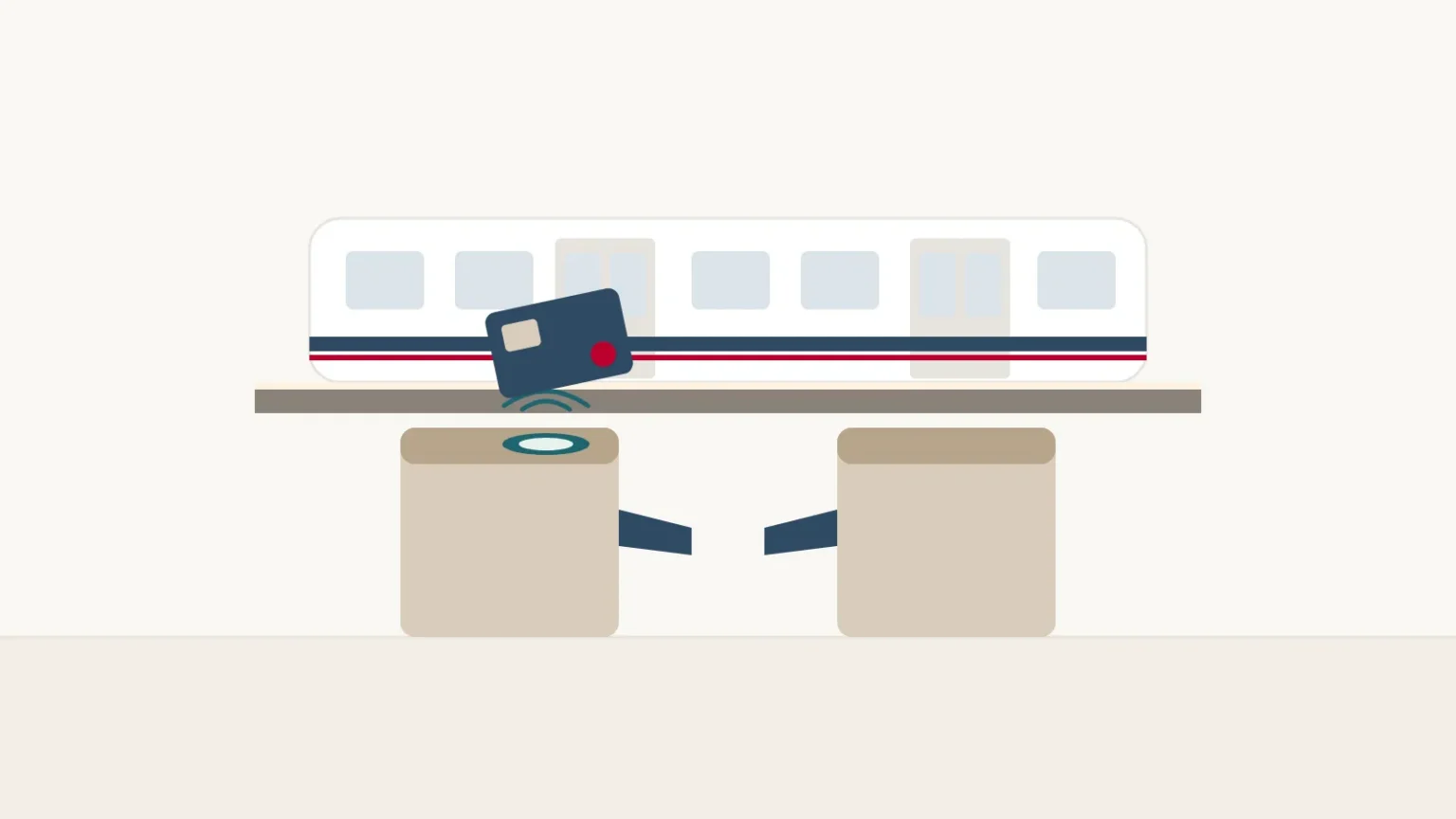
An IC card (ICカード) is a rechargeable card. You touch it on the reader at the ticket gate (改札, kaisatsu) when you go in and when you go out, and the fare is taken from the balance. Cards are issued by regional railway companies, for example Suica and PASMO in the Tokyo area and ICOCA in the Kansai area (including Osaka), but most of them can be used across Japan. You can also use them at many convenience stores and vending machines and in some taxis.
- Buy and top up the card at ticket machines or station counters.
- Most IC cards need a ¥500 deposit, refunded when you return the card to the issuer.
- Fares can be cheaper with an IC card than with a paper ticket.
- Some smartphones can hold a mobile IC card. Check that your phone supports it.
- Visitor cards such as Welcome Suica have no deposit. They are made for short trips, so as a resident choose a normal card.
Registered or unregistered?
A registered card has your name printed on it. You register your name, phone number, date of birth and gender, and if you lose the card it can be reissued. An unregistered card has no name and cannot be reissued.
How to take a train
- Find your destination on the route map, or in a route-search app.
- Touch your IC card at the gate, or buy a ticket and put it in the gate.
- Check the platform number on the station screens, and wait behind the white line or the yellow blocks.
- At your destination, touch your card again at the gate (or insert your ticket).
Our kanji lesson on people and places teaches 駅 (station) and the direction kanji you see on signs.
Express, reserved and Green Car tickets
Ordinary and many rapid trains need only the basic fare. For a bullet train (shinkansen) or a limited express, you also need an express ticket. A reserved seat ticket gives you a fixed seat, and a Green Car ticket is for the higher-grade car.
Commuter passes
A commuter pass (定期券, teikiken) lets you travel between two stations as often as you like for 1, 3 or 6 months. If you go to work or school on the same route every day, it costs less than single fares. Ask your employer how commuting costs are handled before you buy a pass.
Buses
- Long-distance buses: buy your ticket before you get on.
- Local buses with a flat fare: pay when you get on (cash in the fare box, or touch your IC card).
- Local buses with a distance fare: take a numbered ticket (整理券, seiriken) from the machine by the door when you get on. When you get off, pay the fare shown above the driver for your number. With an IC card, touch it when you get on and again when you get off.
Etiquette on trains and buses
- Do not talk on the phone. Talking loudly is also considered bad manners.
- Keep your music at a volume nobody else can hear.
- When it is crowded, take care that your backpack does not bother other people.
- Do not use your phone while walking on platforms or stairs.
Transit apps
Route-search apps and websites show the route, transfer stations, platform, fare and the last train. Many have an English mode. Railway companies also publish delay information on their websites and apps. Before a late night out, check the time of the last train.
Bicycles and other rules
Many residents cycle to the station. Using a phone while riding a bicycle is prohibited by law. The ISA guidebook’s traffic chapter explains the rules for cyclists and electric scooters.
Common mistakes
- Buying an unregistered card for daily use, then losing it with the balance.
- Forgetting to touch out at the gate or on a distance-fare bus.
- Boarding a limited express with only the basic fare.
- Missing the last train and paying for a taxi home.
Station and bus announcements use time and numbers all the time. Practise with our time and dates lesson and short notices reading lesson.
Frequently asked questions
Can I use a Tokyo IC card in Osaka?
Yes, for normal fares in most areas. JNTO says most regional IC cards can be used nationwide. There are exceptions, for example some trips that cross between operators’ areas, so check at the station if a gate rejects your card.
How do I get my IC card deposit back?
Return the card to the company that issued it, usually at one of its station counters. The ¥500 deposit is refunded, and the issuer explains how any remaining balance is handled.
Is a commuter pass worth it?
If you travel the same route on most days, usually yes. Compare the pass price with your daily fare multiplied by your working days.
What if I lose my IC card?
A registered card (with your name) can be reissued; an unregistered card cannot. Go to a station counter of the company that issued it.